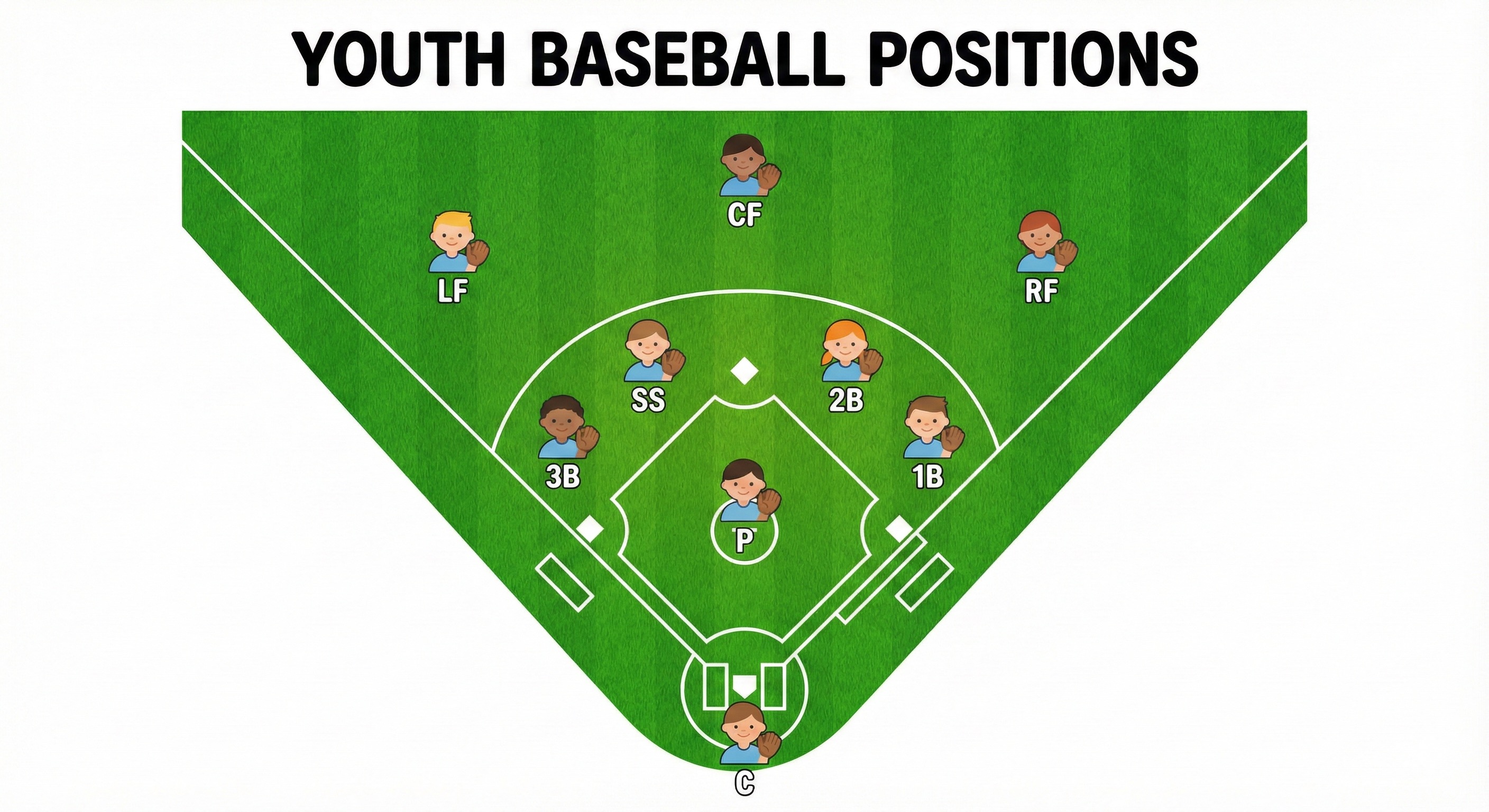
Speaking Baseball: A Parent's Guide to Youth Diamond Communication

Picture this: It's the bottom of the last inning, your child is on second base, and the coach yells "Tag up!" Your young player freezes, confused. That moment of hesitation could mean the difference between scoring the winning run or ending the game with disappointment. Welcome to the world of baseball terminology — where knowing the lingo isn't just helpful, it's essential.
Today's youth players often come to the diamond without the background knowledge that previous generations absorbed from watching countless hours of televised games with family. As parents and coaches, bridging this communication gap is one of the most important things we can do to help young athletes succeed and enjoy the game.
The Art of Hitting: Terms Every Batter Should Know
When your child steps into the batter's box, they enter a world with its own vocabulary. Understanding these terms helps young hitters respond instantly to coaching direction and make smart decisions at the plate.
Understanding the Strike Zone
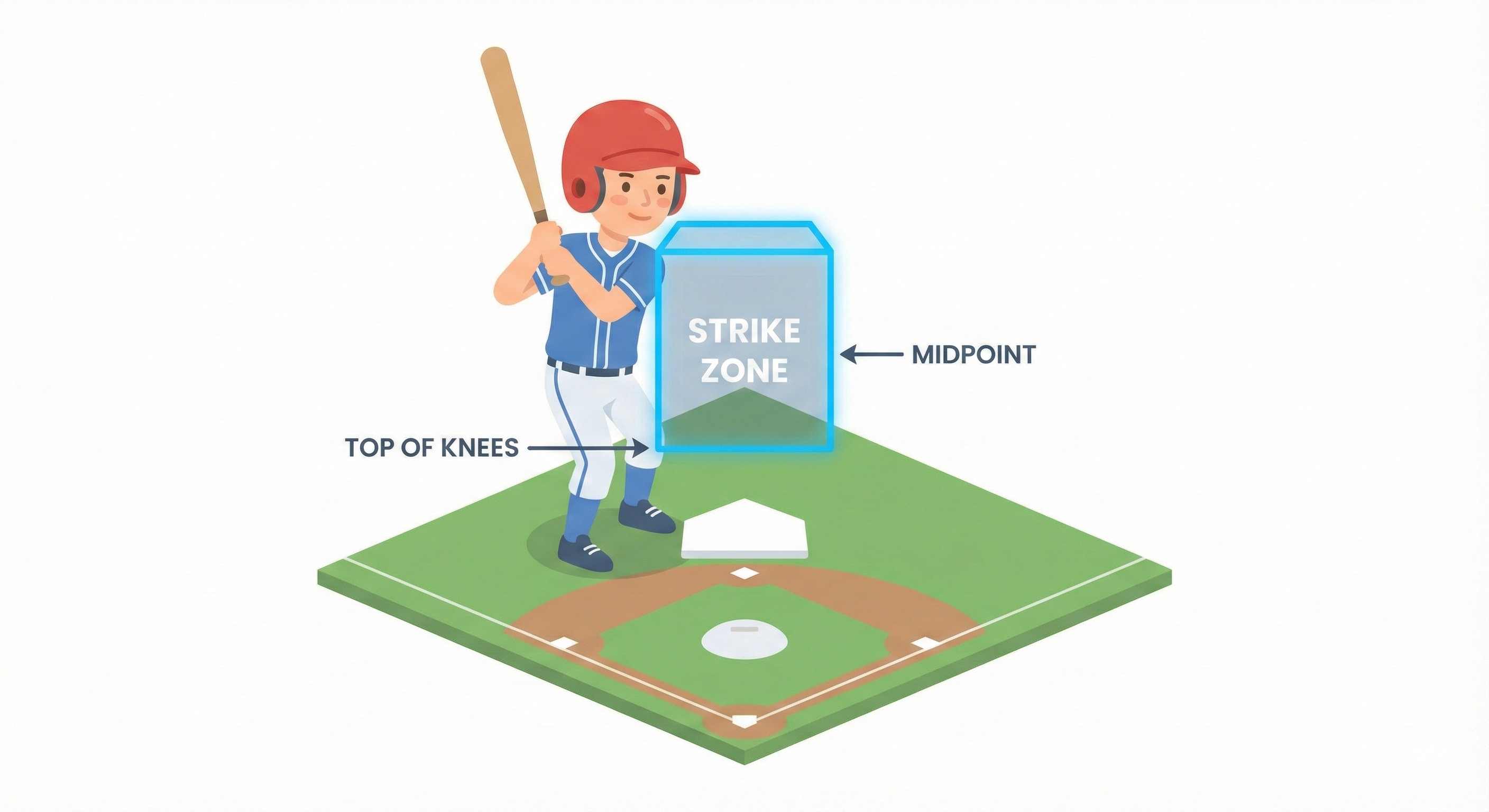
The strike zone is an invisible three-dimensional box over home plate. Think of it as a window: the bottom edge sits at the batter's knees, while the top reaches the midpoint between their shoulders and belt. The width matches home plate itself. Every pitch that passes through this window without being swung at is a strike, while pitches outside are balls. Teaching your child to visualize this zone is fundamental to developing pitch selection skills.
Choking Up on the Bat

When a coach tells a young batter to "choke up," they're instructing them to slide their hands a few inches up from the knob of the bat toward the barrel. This technique shortens the bat's effective length, making it lighter and quicker through the zone. It's particularly useful when facing faster pitchers or when a batter is consistently late on their swing. Many major league players choke up with two strikes to improve bat control.
Positioning in the Box
The batter's box is that chalk rectangle on either side of home plate where hitters must stand. But where within the box matters tremendously. Moving up (toward the pitcher) gives batters more time to see breaking pitches before they curve away. Moving back (toward the catcher) provides extra reaction time against fireballers. Smart coaches adjust their hitters' positioning based on who's on the mound.
The On-Deck Circle and Being In the Hole
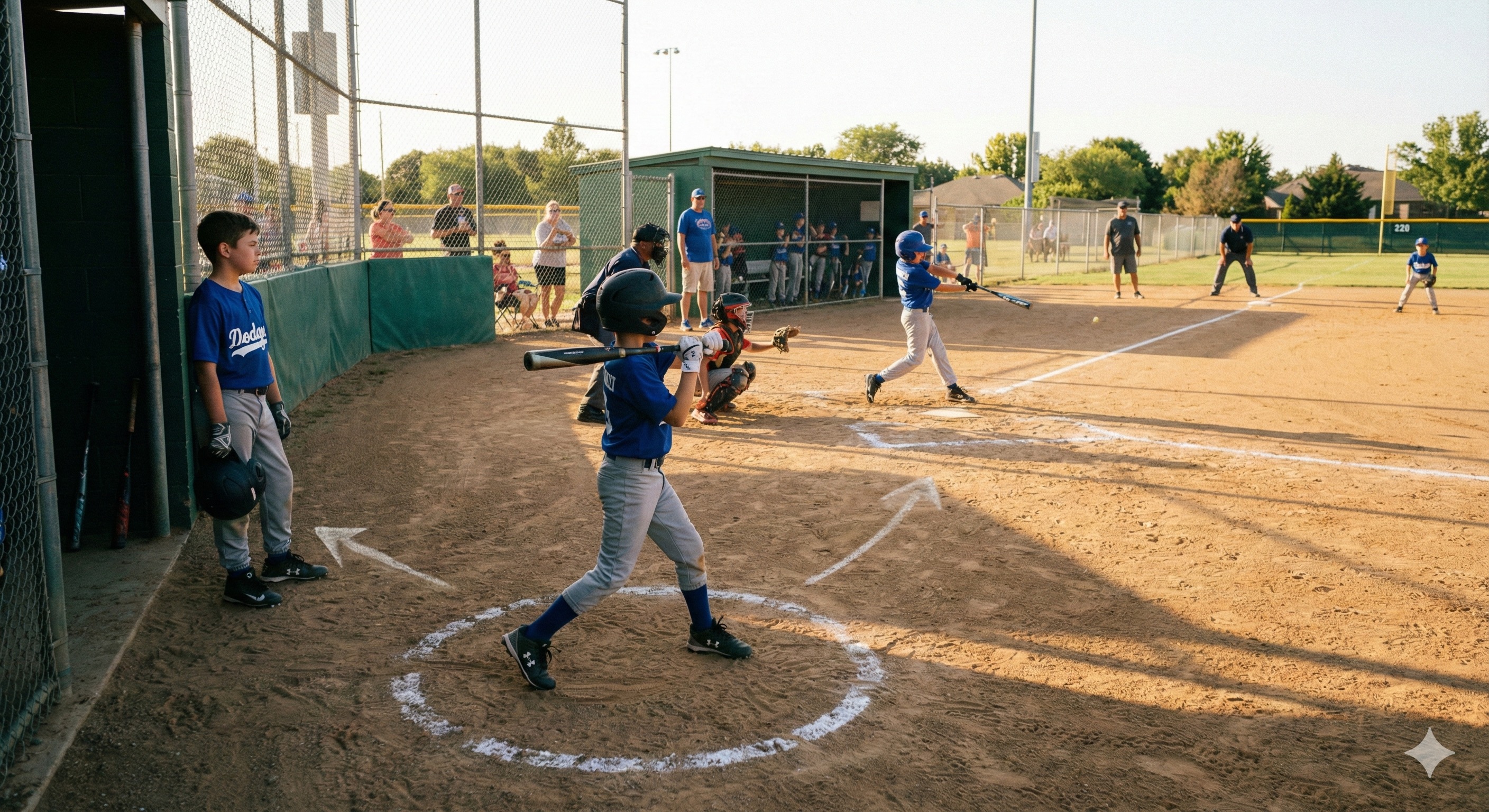
Baseball has a built-in preparation system. The "on-deck" batter is next up and should be warming up, timing the pitcher's delivery, and mentally preparing. The player "in the hole" follows after that. This rotation ensures the game flows smoothly and gives batters adequate time to get ready. Teaching young players this sequence helps them stay mentally engaged throughout the lineup.
Defensive Communication: The Language of the Field
Defense in baseball requires constant communication. A team that talks effectively functions like a well-oiled machine, while silent defenses often collide, miss assignments, and give away runs. Here are the essential defensive terms your young player needs to master.
Force Plays vs. Tag Plays
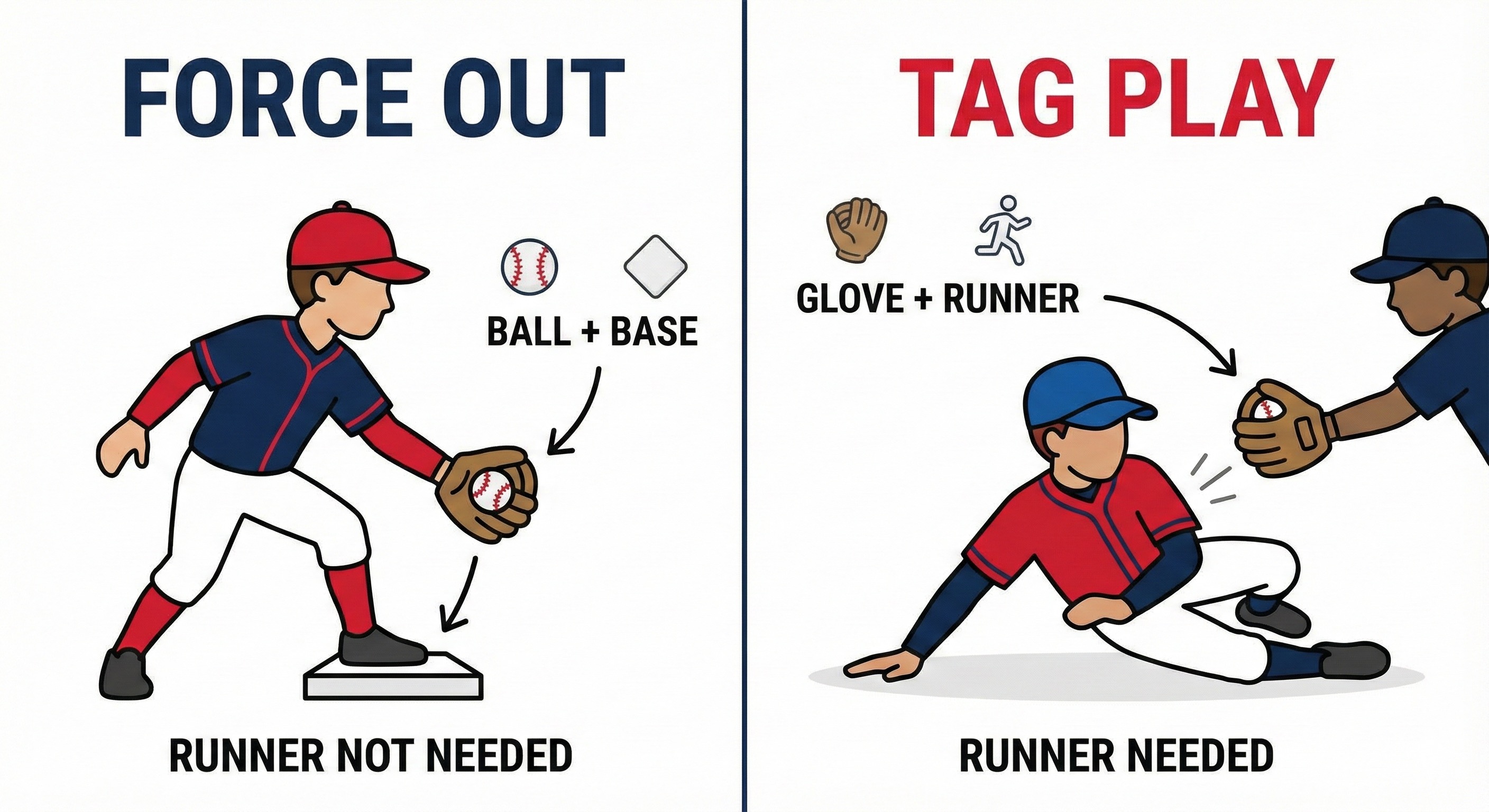
This distinction confuses many young players but is absolutely critical. A force out occurs when a runner must advance because the batter became a runner. In a force situation, the fielder simply touches the base with the ball. No force means the runner has the option to stay put, so a tag play is required — the fielder must touch the runner with the ball or glove holding the ball. Practice identifying these situations repeatedly.
Calling for the Ball

"I got it!" might be the most important three words in youth baseball defense. When a ball is hit in the air, the nearest fielder should loudly and clearly claim it by calling for it. This prevents collisions and dropped balls. The rule is simple: if you call it, others back off. If no one calls it, chaos ensues. Make this an automatic habit.
Understanding Cutoffs and Relays
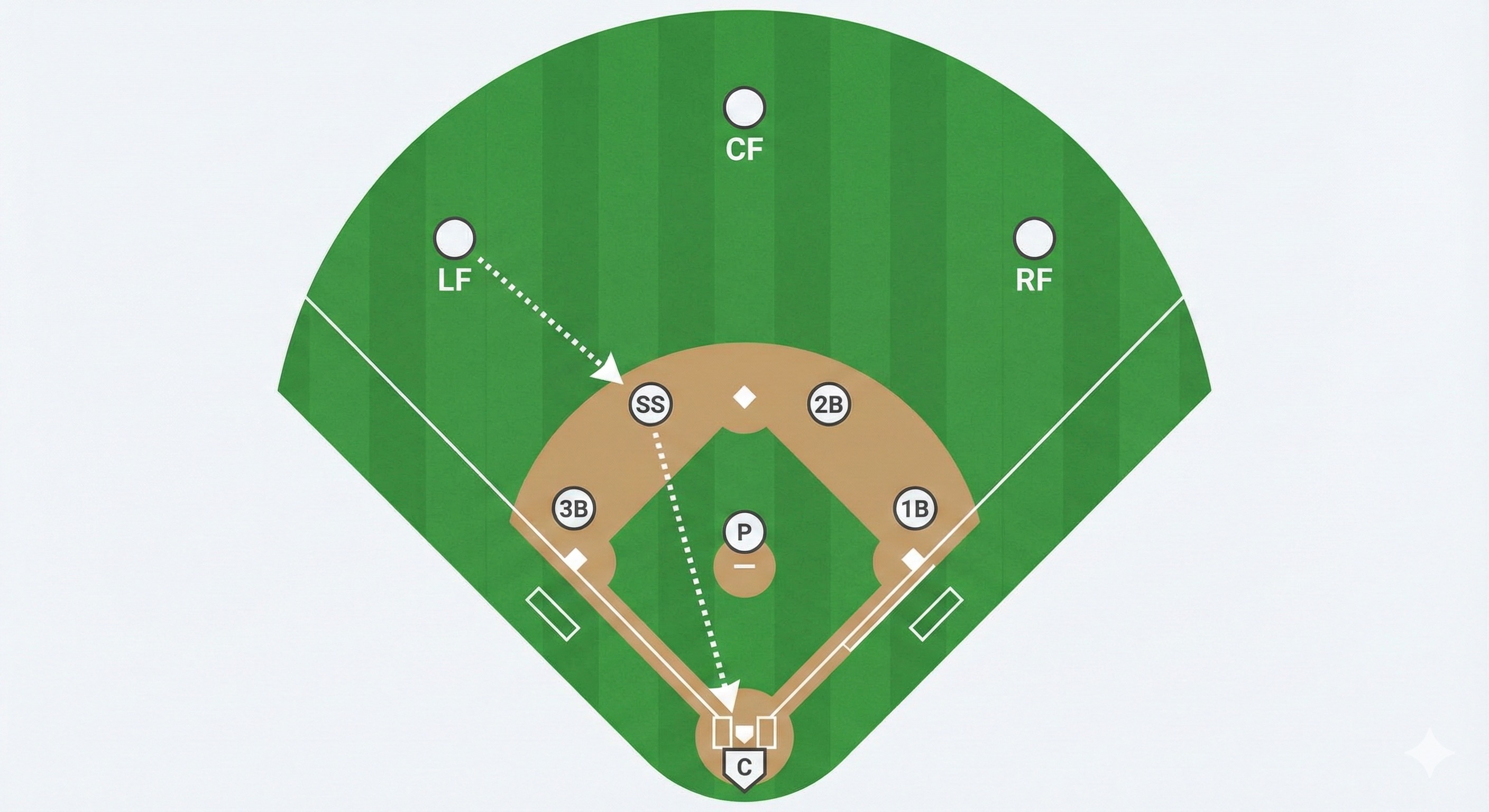
When a ball is hit deep to the outfield, young outfielders often lack the arm strength to throw all the way to the infield. That's where the cutoff player comes in — typically the shortstop or second baseman who positions themselves between the outfielder and the target base. The outfielder throws to the cutoff, who then makes a shorter, quicker throw. This relay system gets the ball home faster than one long, arcing throw.
Shifting Defensive Positions
Astute coaches position their fielders based on each batter's tendencies. If a left-handed pull hitter is up, fielders might shift toward the right side. The command "shift left" or "shift right" tells fielders to reposition before the pitch. Being able to move as a unit based on brief instructions is a hallmark of well-coached teams.
Baserunning Wisdom: Moving Smart on the Basepaths
Baserunning separates good teams from great ones. It requires split-second decisions, awareness of the game situation, and understanding of several key concepts.
The Tag Up Rule
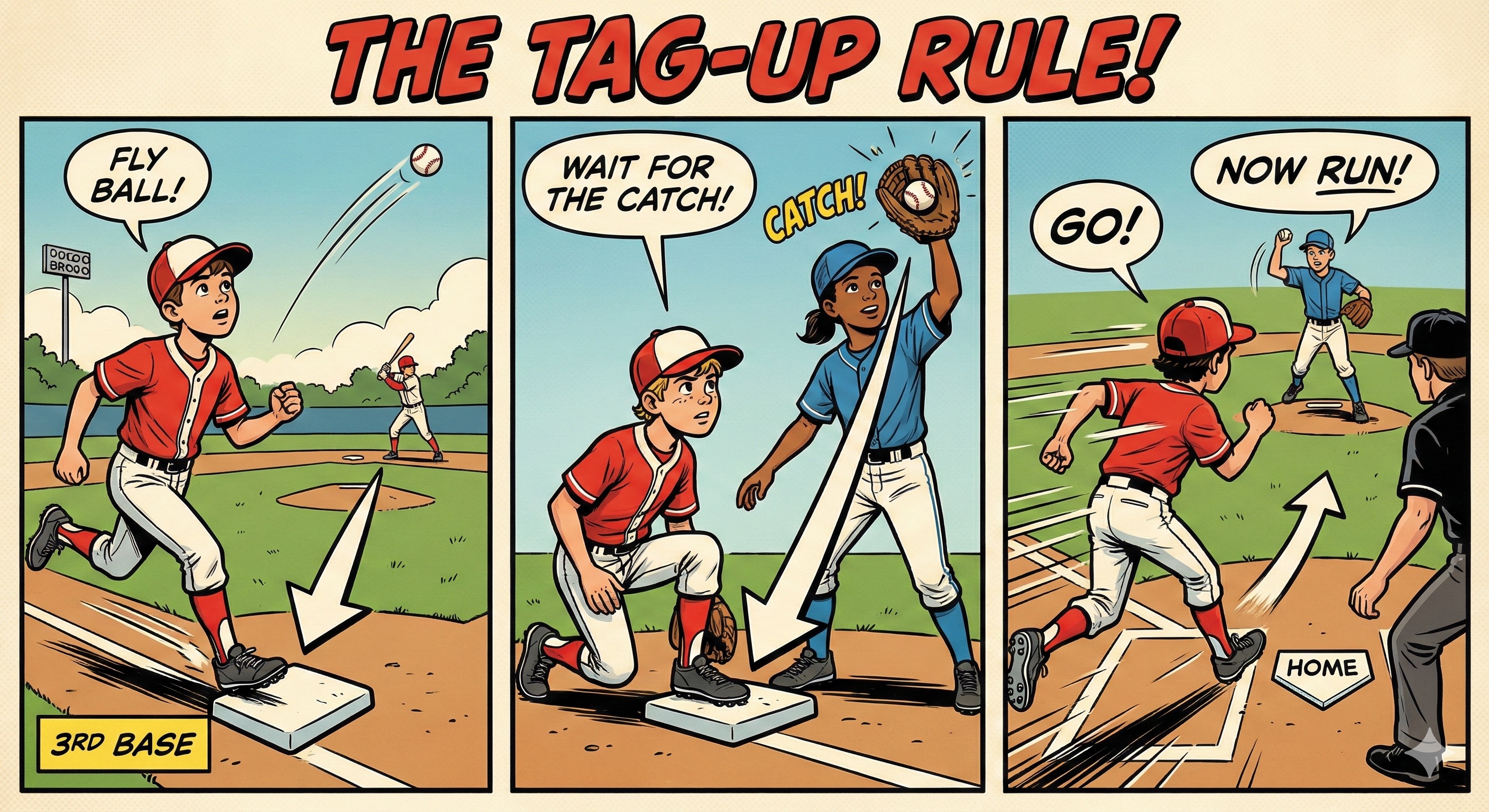
When a fly ball is caught, runners must return to their original base and "tag up" before advancing. They touch their base, wait for the catch, then can attempt to advance. Leaving early means they can be doubled off if the defense throws back to the base. This rule applies to all fly balls and line drives that are caught — and forgetting it is one of the most common baserunning mistakes in youth baseball.
Lead Runner Awareness
The "lead runner" is the baserunner closest to home plate. In many situations, getting the lead runner out is the defense's priority since that runner represents a potential run. For baserunners, being aware of whether you're the lead runner changes your decision-making — you're the target, so you must be extra cautious.
Recognizing Double Play Situations

A double play — two outs on one play — is a pitcher's best friend and an offense's nightmare. The classic scenario: runner on first, ground ball to an infielder who throws to second for the force, then the relay to first beats the batter. Runners must read the ball off the bat and react instantly. A slow roller might be worth trying to break up the double play, while a sharp grounder directly at an infielder is likely to result in two outs.
Pitching Fundamentals: Mound Mechanics in Plain Language
Young pitchers need to understand basic terminology to receive and implement coaching effectively.
The Stretch vs. The Windup
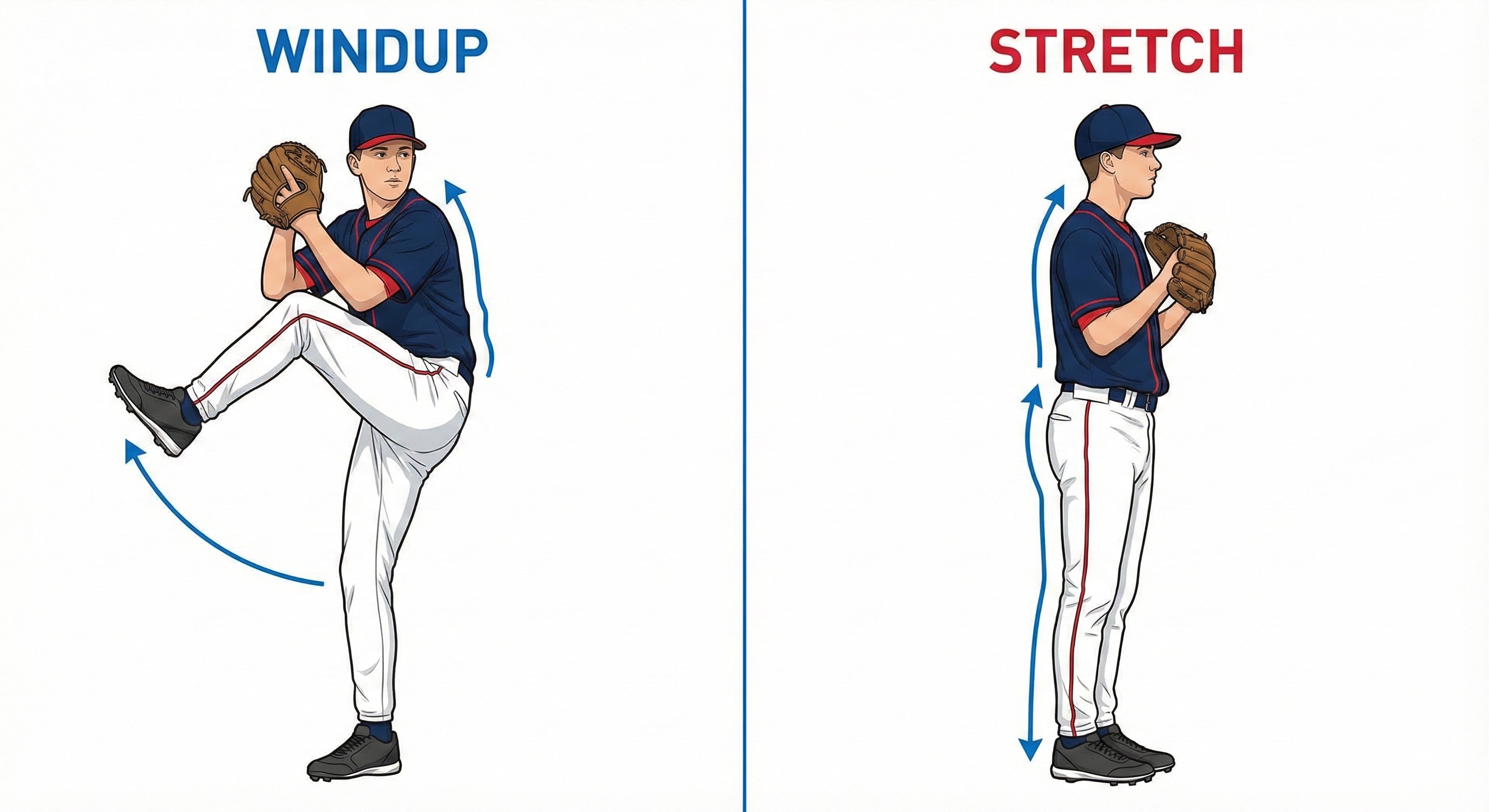
Pitchers can deliver the ball from two basic positions. The windup involves a full, elaborate motion with a leg kick that generates maximum power. The stretch (or set position) is a quicker, more compact motion used primarily with runners on base to prevent stolen bases. Most youth coaches teach the stretch first since it's simpler and reduces the risk of mechanical problems.
Pitch Types at the Youth Level
While major leaguers throw dozens of pitch variations, youth pitchers should master control before adding complexity. The fastball is the foundation — thrown with maximum velocity and proper mechanics. Once that's consistent, a change-up (same arm motion but slower speed to disrupt timing) can be introduced. Breaking pitches that stress young arms should be avoided until players mature physically.
Making It Stick: Teaching Tips for Parents and Coaches

Knowing these terms yourself is only half the battle. Getting young players to internalize them requires deliberate practice.
-
Repetition wins: Review terminology at every practice. One explanation isn't enough — young minds need repeated exposure.
-
Game-speed scenarios: Set up practice situations and call out terms exactly as you would during games. Let players practice responding to real commands.
-
Watch their eyes: When a player looks confused after instruction, that's a teaching moment. Don't assume they understood — ask them to explain what you meant.
-
Make it visual: Walk through scenarios on the field. Show them the strike zone with your hands. Demonstrate choking up. Visual learning reinforces verbal instruction.
-
Quiz during downtime: Car rides to games are perfect for quick terminology quizzes. Make it a game within the game.

The Communication Advantage
Teams that speak the same baseball language have a genuine competitive edge. When a coach can bark out quick instructions during live action and every player responds correctly, that team will make fewer mental mistakes, execute more efficiently, and ultimately win more games.
More importantly, players who understand the game deeply enjoy it more. Baseball's strategic richness becomes accessible when you speak its language. Your young player won't just be going through the motions — they'll be thinking the game, anticipating situations, and feeling like a real ballplayer.
So start talking baseball. Your future all-star is listening.